
Water has been used as a tool for physical comfort and recovery for thousands of years. But what is hydrotherapy, exactly, and how does it apply to the wellness experiences available today? At its broadest, hydrotherapy refers to the use of water in different temperatures, pressures and forms to support relaxation, ease physical tension and promote a sense of wellbeing. It spans a wide range of contexts, from clinical rehabilitation settings supervised by healthcare professionals to the contrast circuits and thermal baths found in modern spas. This guide focuses primarily on the wellness side of that spectrum, explaining what spa-based hydrotherapy looks like, what benefits it is associated with, and why so many people find it a genuinely restorative experience.
What is hydrotherapy?
The question of what is hydrotherapy does not have a single, fixed answer, because the term covers a broad range of water-based practices with different purposes and contexts. At one end of the spectrum, clinical hydrotherapy refers to the use of water in physical rehabilitation, typically under the guidance of a physiotherapist or healthcare provider, to support recovery from injury, manage certain chronic conditions, or facilitate movement in people for whom land-based exercise is difficult. This kind of hydrotherapy is a medical or therapeutic intervention with specific protocols and professional oversight.
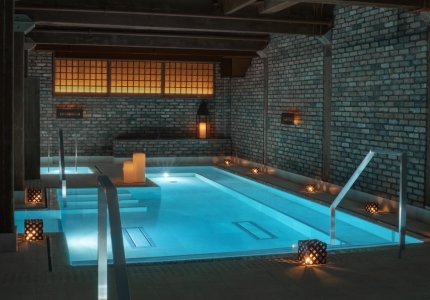
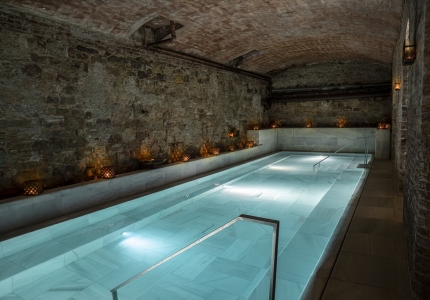
At the other end of the spectrum sits the hydrotherapy most people encounter in spa and wellness settings: warm pools, contrast baths, pressurised water jets, steam rooms, and the kind of temperature-based circuits that form the heart of a thermal bathing experience. This version of hydrotherapy is not a medical treatment. It is a wellness practice that uses the physical properties of water, its temperature, pressure and buoyancy, to create conditions for rest, muscle ease, and sensory calm.
Hydrotherapy spa treatments: saunas, contrast baths and water circuits
A hydrotherapy spa experience is built around the idea that water, used intentionally and in sequence, can do something that a single warm bath cannot. The key is variety: moving between different temperatures, pressures and forms of water creates a cumulative effect on the body that most people find deeply restorative.
Warm pools and thermal baths
The foundation of most spa hydrotherapy circuits is warm water immersion. Soaking in water heated to around 36 to 40 degrees Celsius allows the body to surrender to buoyancy, which reduces the sensation of weight and lets muscles that are habitually engaged for posture and movement finally release. The warmth also supports vasodilation, the widening of blood vessels near the skin surface, which many people experience as a gentle, spreading sense of ease through the body.
Contrast baths and cold plunges
The shift from warm to cold water is one of the most distinctive moments in a hydrotherapy spa circuit. Stepping from a warm pool into a cold plunge or standing under a cold shower jet produces an immediate and very physical response: vasoconstriction, a sharpening of alertness, and a kind of reset that is difficult to replicate through any other means. Many people describe this transition as the moment the circuit really begins to work, when the body is asked to respond and adapt rather than simply rest.
Pressurised water jets
Many hydrotherapy spa circuits include water jets that direct streams of water at different pressures and temperatures toward specific areas of the body. These can range from gentle, broad jets that create a massaging effect across the back and shoulders to more focused streams aimed at areas of particular tension. The combination of pressure and temperature makes this a more active form of hydrotherapy, one that many people find useful for areas where tension tends to accumulate, such as the lower back, neck, and legs.
Steam rooms and heated environments
Moist heat, in the form of a steam room or hammam-style environment, is another element often woven into a hydrotherapy circuit. The high humidity and warmth of a steam room create conditions that feel different from both a dry sauna and a warm pool: the air is dense, the breathing slows, and the skin responds to the moisture in a way that many people find particularly soothing. Used between warmer and cooler water experiences, it adds another layer of sensory texture to the overall circuit.
The ritual of temperature sequencing
What distinguishes a well-designed hydrotherapy spa circuit from simply using a series of different facilities is the intentional sequencing of temperatures and water experiences. Moving from warm to hot to cold and back again, with periods of rest between each transition, creates a rhythm that the body begins to respond to over the course of the session. By the end of a full circuit, most people report a quality of physical ease and mental calm that accumulates gradually rather than arriving all at once.
Benefits associated with hydrotherapy
The benefits associated with hydrotherapy in a wellness context are well documented in the experiences of practitioners and users, even if the clinical evidence for specific outcomes varies. These are the effects most consistently reported:
Muscle ease and reduced physical tension
Warm water immersion is associated with a reduction in the subjective sense of muscle tightness and tension. The combination of buoyancy, which reduces the load on joints and muscles, and warmth, which supports vasodilation and blood flow to the peripheral tissues, may help ease the feeling of physical tension that accumulates through exercise, sedentary work, or stress. This is one of the most consistently reported benefits across hydrotherapy contexts.
A lighter feeling in the body
The buoyancy of water reduces the effective weight of the body during immersion, which many people experience as a profound sense of physical lightness. For people who carry significant physical tension or who spend long periods on their feet, this sensation can feel genuinely restorative in a way that is difficult to achieve through other means.
Support for circulation
The alternation between warm and cool water that characterises contrast hydrotherapy is associated with changes in peripheral circulation. Warm water promotes vasodilation; cold water causes vasoconstriction. The alternation between the two stimulates blood flow in the outer layers of the body and is often described by users as producing a feeling of warmth, energy and physical aliveness after the circuit. This is a commonly reported effect rather than a guaranteed physiological outcome, and individual responses vary.
Calm and mental decompression
Perhaps the most widely reported benefit of a hydrotherapy spa experience is its effect on mental state. The combination of sensory immersion, a defined sequence of experiences, the absence of screens and ordinary demands, and the physical effects of water on the body creates conditions in which the mind tends to slow down naturally. Many people describe a quality of calm after a hydrotherapy circuit that feels different from ordinary relaxation: quieter, more complete, and longer-lasting.
Who hydrotherapy may suit
In a wellness context, hydrotherapy tends to appeal to people who are looking for active rest: an experience that engages the body and senses in a way that ordinary relaxation does not. It suits people who want to ease everyday physical tension after a demanding week, those who are curious about thermal bathing traditions, and those who simply want a different kind of wellness experience from what a massage or yoga class offers.
The experience is generally well-tolerated by healthy adults, and the adjustable nature of most spa circuits means that participants can move through the temperatures at their own pace and skip any element that does not feel right on a given day.
It is worth noting, however, that hydrotherapy in a wellness or spa setting is not a substitute for medical or rehabilitative care. Anyone who is interested in using hydrotherapy to address a specific health condition, support recovery from an injury, or manage a chronic issue should do so under the guidance of a qualified healthcare provider. The clinical and wellness uses of hydrotherapy involve different protocols, settings and levels of supervision, and the distinction matters.
Hydrotherapy at AIRE
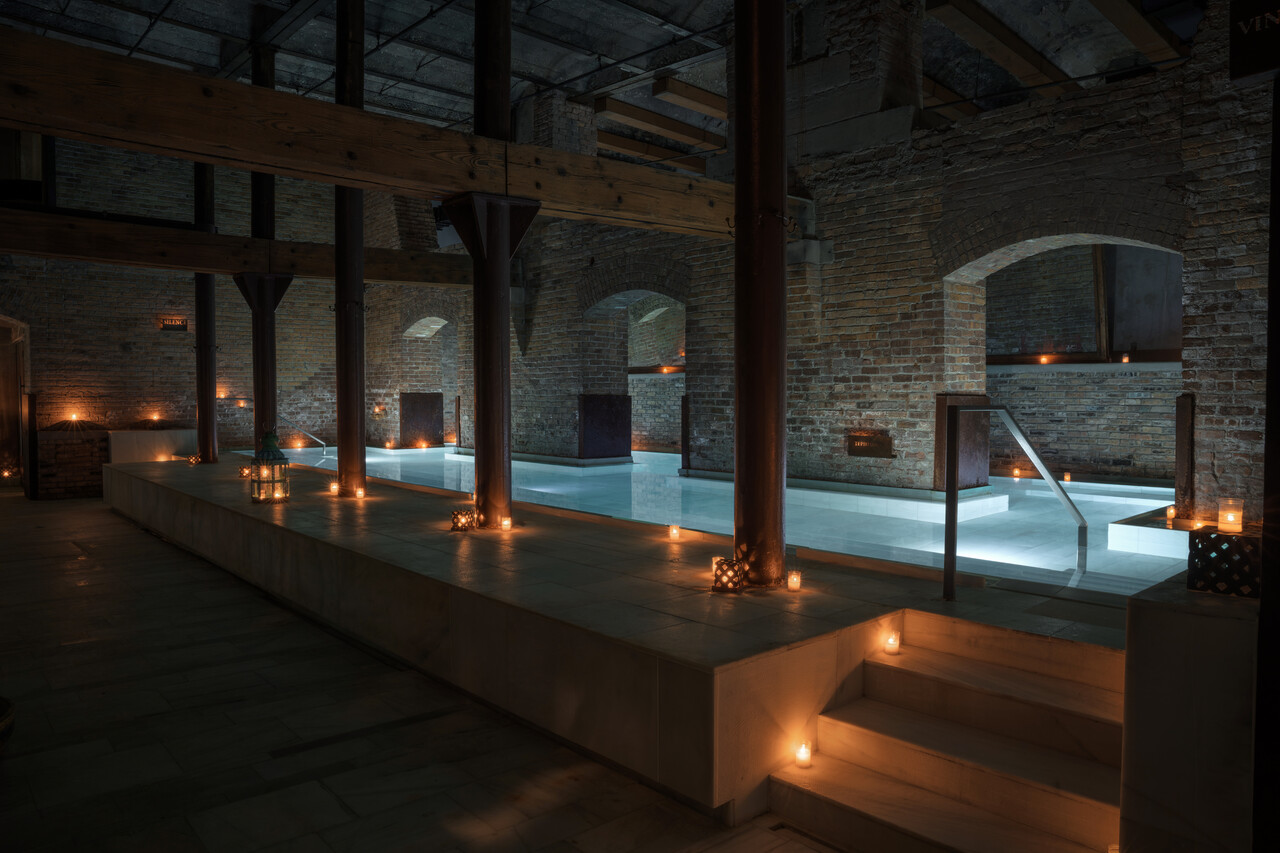
AIRE Ancient Baths is built around the same principle that has made hydrotherapy a part of human wellness culture for thousands of years: that water, used with intention and in the right sequence, creates conditions for genuine rest and physical ease that are difficult to find anywhere else.
The thermal circuit at AIRE moves through warm and cool water baths, contrast experiences, and spaces designed to let the body respond and recover between transitions.
Frequently asked questions about hydrotherapy
What is hydrotherapy?
Hydrotherapy is the use of water in different temperatures, pressures and forms to support physical comfort, relaxation and wellbeing. It spans both clinical rehabilitation settings, where it is used under professional supervision to support recovery from injury or manage certain conditions, and wellness or spa contexts, where it refers to thermal baths, contrast circuits, water jets and related experiences designed to promote rest and ease.
What happens in a hydrotherapy spa?
A hydrotherapy spa experience typically involves moving through a sequence of water-based environments at different temperatures: warm pools, cold plunges, pressurised water jets, steam rooms, and rest areas between each transition.
What are the main benefits of hydrotherapy?
The benefits most consistently associated with hydrotherapy in a wellness context include a reduction in the subjective sense of muscle tension, a feeling of physical lightness due to the buoyancy of water, support for peripheral circulation through contrast temperature exposure, and a quality of mental calm and decompression that many people find distinctive.
Is hydrotherapy the same as physical therapy in water?
No, though the two share some principles. Hydrotherapy in a clinical or rehabilitation setting is a supervised therapeutic intervention, conducted by a qualified physiotherapist or healthcare provider, with specific goals related to recovery or condition management.
Who should avoid hydrotherapy?
Most healthy adults can enjoy hydrotherapy in a spa setting without concern. However, people with certain cardiovascular conditions, those who are pregnant, anyone with open wounds or active skin conditions, and people with conditions that are sensitive to temperature changes should consult a healthcare provider before participating. When in doubt, the staff at a reputable spa or thermal facility can provide guidance on which elements of a circuit may or may not be suitable for a given situation.