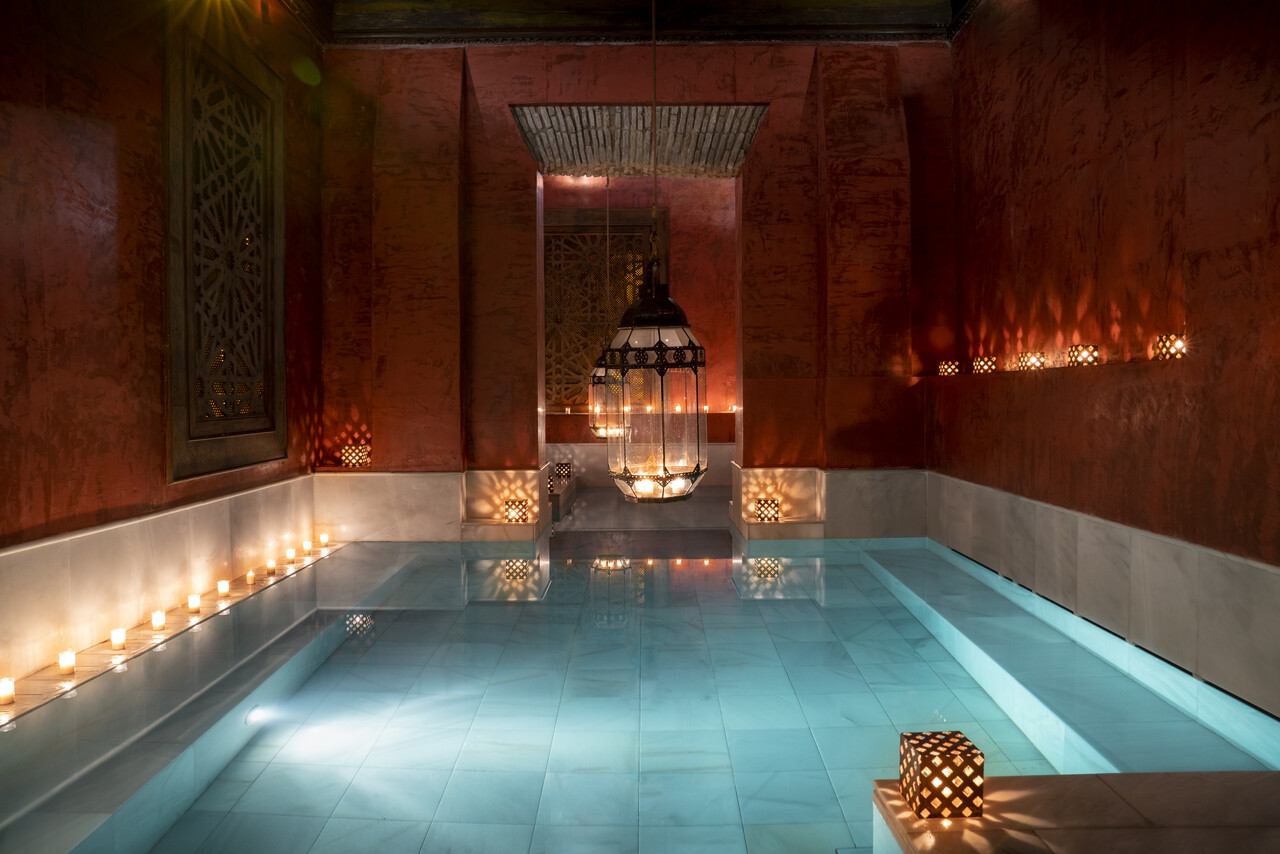


El tepidarium es una de las salas más características de las termas romanas y, al mismo tiempo, una de las que mejor ha sobrevivido en la cultura del bienestar contemporáneo. No es la sala más caliente ni la más fría, sino la que se sitúa entre ambas extremos, ofreciendo una temperatura moderada y un ambiente calmado que invita a quedarse. Entender qué era el tepidarium, cómo funcionaba en el contexto histórico y qué sensaciones se le asocian ayuda a comprender por qué sigue siendo parte de los circuitos termales actuales.
¿Qué es el tepidarium?
La pregunta de tepidarium que es se responde con una definición sencilla: el tepidarium era la sala templada de las termas romanas, mantenida a una temperatura moderada, en torno a los 38 y 40 grados, con un ambiente seco y una humedad baja. Su posición dentro del recorrido termal era estratégica: servía como espacio de transición entre el calor intenso del caldarium y el contraste frío del frigidarium.
A diferencia del caldarium, que exigía al cuerpo una adaptación rápida al calor y al vapor, el tepidarium ofrecía un calor más suave y gradual. Era la sala donde el cuerpo podía detenerse, respirar y prepararse para el cambio de temperatura siguiente. También era, por esa misma razón, un espacio de descanso y conversación: una sala en la que quedarse un rato, sin la urgencia que imponían los extremos térmicos del circuito.
Origen del tepidarium romano
El tepidarium romano tiene su origen en la organización de las termas de la Antigua Roma, que a partir del siglo II a.C. comenzaron a desarrollarse como espacios públicos complejos, con diferentes salas diseñadas para guiar al bañista a través de una secuencia de experiencias térmicas. Las primeras termas más sencillas se calentaban mediante braseros de carbón situados dentro de la sala. Con el tiempo, el desarrollo del sistema de hipocausto permitió una calefacción mucho más eficiente y uniforme.
El hipocausto funcionaba haciendo circular aire caliente bajo el suelo elevado de la sala, a través de un espacio hueco sostenido por pequeñas columnas de ladrillo, y luego subiendo ese calor por tubos cerámicos empotrados en las paredes. En el tepidarium romano, este sistema solía funcionar de forma indirecta: la sala recibía calor residual del horno que alimentaba el caldarium adyacente, lo que la mantenía en una temperatura más moderada sin necesidad de una fuente de calor propia y más intensa.
En algunos tepidaria de la época imperial se añadió una pequeña piscina con agua a temperatura intermedia, lo que ampliaba las posibilidades del recorrido y permitía una inmersión suave antes del agua fría del frigidarium.
Qué se siente en un tepidarium
Para quien nunca ha entrado en un tepidarium, imaginarse la experiencia puede resultar difícil si se intenta comparar con una sauna o un baño de vapor. El tepidarium es otra cosa: más suave, más discreto en sus efectos, pero no por eso menos agradable.
Al entrar, lo primero que se percibe es un calor uniforme que viene de todas las superficies a la vez: el suelo bajo los pies, las paredes alrededor, el aire que llena el espacio. No hay humedad intensa ni vapor que dificulte la respiración. El ambiente es seco y cálido, con una temperatura que el cuerpo acepta de forma gradual, sin el impacto inicial que produce una sala más caliente.
Con el tiempo dentro de la sala, los músculos se ablandan, la respiración se ralentiza y la tensión acumulada en el cuerpo empieza a ceder. Muchas personas describen el tepidarium como la sala en la que el cuerpo por fin suelta lo que llevaba cargando. No hay nada que hacer excepto estar ahí, dejarse caer en el calor suave y esperar a que el cuerpo responda a su ritmo. Es una experiencia de relajación progresiva que puede favorecer la circulación superficial y preparar los tejidos para los contrastes térmicos que siguen en el circuito.
Tepidarium y sauna: en qué se diferencian
Una de las confusiones más habituales entre quienes se acercan por primera vez a los circuitos termales es la diferencia entre el tepidarium y la sauna. Aunque ambas son salas de calor seco, la experiencia que ofrecen es bastante diferente.
|
Espacio |
Sensación de calor |
Ambiente |
|
Tepidarium |
Suave y progresivo |
Seco, cálido, tenue |
|
Sauna finlandesa |
Intenso |
Seco, muy caliente |
|
Baño de vapor |
Intenso y húmedo |
Húmedo, denso |
La sauna finlandesa trabaja con temperaturas que suelen situarse entre los 70 y los 100 grados, produciendo una sudoración intensa y una sensación de calor que exige al cuerpo una respuesta activa. El baño de vapor combina calor y humedad elevada, creando un ambiente más envolvente pero también más denso. El tepidarium, en cambio, ofrece un calor moderado y seco que el cuerpo integra de forma gradual, sin demandas físicas intensas. Eso lo convierte en una opción especialmente accesible para personas que encuentran la sauna demasiado intensa o que buscan una experiencia de calor más larga y reposada.
El tepidarium en la experiencia AIRE
El legado del tepidarium romano sigue muy presente en los circuitos termales contemporáneos. La idea de guiar el cuerpo por diferentes temperaturas, de lo suave a lo intenso y de vuelta al equilibrio, es la misma lógica que organizaba el recorrido de las termas romanas y que hoy sigue siendo la base de las experiencias de bienestar más completas.
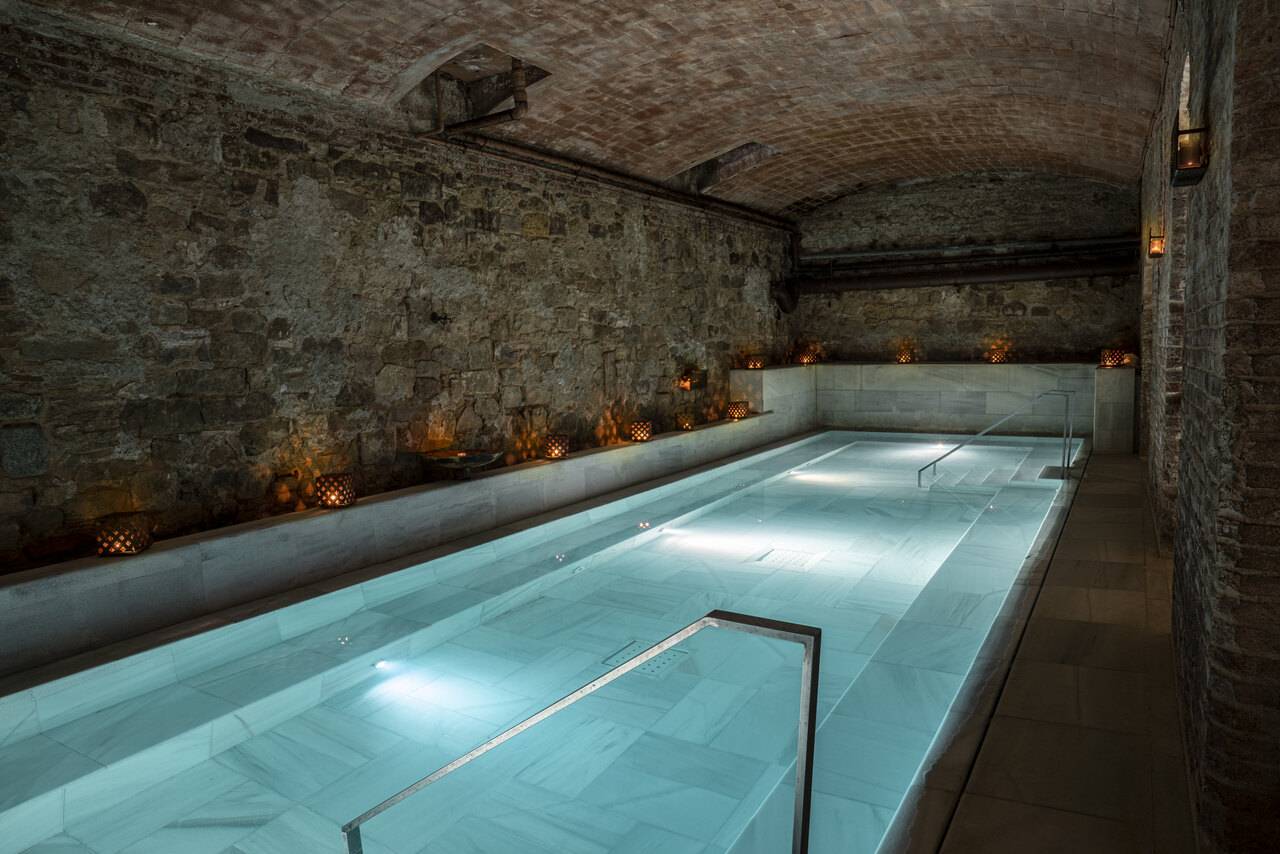
AIRE Ancient Baths integra esa misma lógica en su propuesta: un recorrido por baños de distintas temperaturas, con espacios de calor moderado que permiten al cuerpo aclimatarse antes de los contrastes más intensos, y zonas de descanso donde simplemente estar. La arquitectura, la luz y el silencio del espacio acompañan el ritual, haciendo que el tiempo dentro se sienta diferente al de fuera. Para quienes quieran explorar esa experiencia, los circuitos termales de AIRE ofrecen un punto de partida natural para redescubrir lo que los romanos ya sabían sobre el agua, el calor y el cuidado del cuerpo.
Preguntas frecuentes sobre el tepidarium
¿Qué es el tepidarium?
El tepidarium es la sala templada de las termas romanas, caracterizada por una temperatura moderada (en torno a los 38-40 grados), un ambiente seco y un calor uniforme que viene de todas las superficies. Su función es servir de transición entre el calor intenso del caldarium y el contraste frío del frigidarium, y también como espacio de descanso dentro del recorrido termal.
¿Qué temperatura tiene un tepidarium?
En las termas romanas, el tepidarium se mantenía a una temperatura moderada, claramente inferior a la del caldarium. En los circuitos termales actuales, las salas de tipo tepidarium suelen situarse entre los 37 y los 42 grados aproximadamente, lo suficientemente cálidas para sentirse significativas pero cómodas para permanecer durante más tiempo.
¿Qué diferencia hay entre el tepidarium y una sauna?
La sauna trabaja con temperaturas mucho más altas, entre 70 y 100 grados, y produce una sudoración intensa. El tepidarium ofrece un calor más suave y sostenido, sin el impacto físico de la sauna. Es una experiencia más gradual y menos exigente, lo que lo hace accesible para personas que buscan relajación sin la intensidad de un ambiente de calor extremo.
¿Para qué sirve el tepidarium dentro de un circuito termal?
Dentro de un circuito termal, el tepidarium cumple una función de transición: prepara el cuerpo para pasar al calor más intenso del caldarium o lo ayuda a enfriarse gradualmente antes del contraste del agua fría. También funciona como sala de descanso en la que quedarse entre dos momentos de mayor intensidad térmica.
¿Cuánto tiempo se recomienda estar en un tepidarium?
No existe una indicación fija, pero la naturaleza suave del tepidarium lo hace apto para estancias más largas que las salas de mayor temperatura. Muchas personas permanecen entre 15 y 30 minutos, aunque el cuerpo suele indicar de forma bastante clara cuándo es el momento de continuar el recorrido o de simplemente seguir descansando.
¿Qué se hace en un spa y cómo sacar el máximo partido a tu visita?