
Few things in the ancient world combined practicality, pleasure, and social life as seamlessly as roman baths. These remarkable spaces were central to daily existence across the Roman Empire, and the culture they embodied, one built around water, heat, ritual, and communal rest, has never entirely disappeared. This article explores what Roman baths were, how they worked, and why the tradition they represent still resonates in modern wellness culture.
What are Roman baths?
What are Roman baths? At the most basic level, they were communal bathing complexes built throughout the Roman world, from Britain to North Africa, from Spain to the eastern Mediterranean. But to describe them simply as places to wash would be to miss almost everything that made them significant.
Roman baths were public institutions in the fullest sense. They were places where people of different social classes came together to bathe, socialise, exercise, conduct business, meet friends, and spend leisure time. Entry was cheap or sometimes free, subsidised by wealthy patrons or the state, which meant that the baths were genuinely open to a broad cross-section of Roman society.
The largest examples, like the Baths of Caracalla or the Baths of Diocletian in Rome, were enormous complexes capable of accommodating thousands of visitors at a time. They included not just bathing rooms but also gardens, libraries, shops, and spaces for physical exercise. They were less like a modern spa and more like an entire civic amenity compressed into a single building.
How Roman public baths worked
The experience of visiting Roman public baths followed a recognisable sequence, though the details varied depending on the size and location of the establishment.
The journey typically began in the apodyterium, the changing room, where visitors would leave their clothes and belongings before moving into the bathing areas. From there, the usual progression moved through a series of rooms designed around temperature, each serving a different function in the broader ritual of cleansing and relaxation.
The tepidarium was a warm, moderately heated room that served as a transition space, allowing the body to adjust gradually before entering more extreme temperatures. It was also a place to linger, rest, and socialise. The caldarium was the hot room, typically heated to a high temperature, where bathers would sweat and be scraped clean using a curved metal tool called a strigil, removing oil, sweat, and dirt from the skin. The frigidarium offered a cold plunge pool for the final stage of the bathing sequence, closing the pores and producing the sharp, refreshing sensation that followed the heat.
Some larger complexes also included a laconicum, an intensely dry hot room similar to what we would now call a sauna, as well as outdoor exercise areas called palaestrae where visitors could train before bathing.
The sequence of warm, hot, and cold was not arbitrary. It reflected an understanding, refined over centuries, that moving through different temperatures had both physical and restorative effects. That same logic still underlies most serious thermal bathing traditions today.
Difference Between Thermal Bath and Spa: Discover Which Is Best for You
Rituals and routines inside Roman baths
What made Roman baths culturally distinctive was not just their architecture but the rituals that took place within them. Bathing in the Roman world was not a private, hurried act. It was a social occasion with its own rhythms and customs.
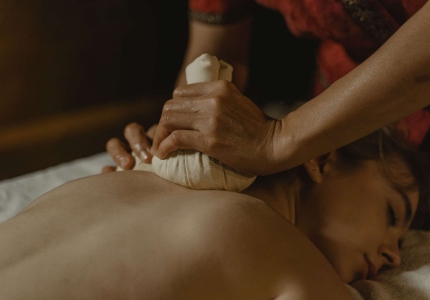
Visitors might spend several hours in the baths across an afternoon. The sequence of rooms provided a structure, but within that structure there was room for conversation, relaxation, and the kind of unhurried time that modern life rarely allows. Masseurs and attendants were available for hire; oils were applied to the skin before bathing and scraped off afterwards as part of the cleansing process; food and drink vendors circulated through the spaces.
The social dimension was inseparable from the physical one. Business was conducted, friendships maintained, gossip exchanged. Writers of the period described the noise of baths as one of the defining sounds of a Roman city: the splashing of water, the slap of hands on skin during massage, the calls of vendors, the echo of voices in tiled rooms.
For all this activity, there was also a quality of ritual about the experience. The sequence of rooms, the progression through temperatures, the care given to the body, the time set aside specifically for this purpose: all of it gave the daily visit to the baths a character that was more than merely hygienic. It was a practice of care, connection, and rest built into the rhythm of everyday life.
Why Roman baths still matter today
The influence of Roman bathing culture did not end with Rome. It filtered through Byzantine, Arab, and Ottoman traditions, shaping the hammam. It persisted in the thermal bathing cultures of central Europe, in the Finnish sauna, in the Japanese onsen. The idea that water, heat, and ritual pause are not luxuries but necessities has proved remarkably durable.
Modern wellness spaces, whether thermal spas, hammams, or contemporary bathing experiences, draw on the same essential architecture: a sequence of temperatures, communal or semi-communal spaces, time structured around rest and physical care, and the deliberate separation of the visitor from the demands of ordinary life.
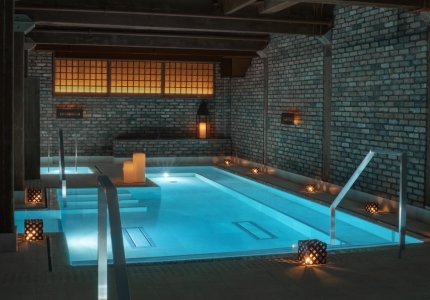
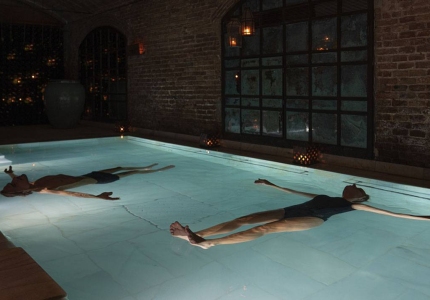
AIRE Ancient Baths is one example of a space that consciously references this tradition. Its design and experience draw on the idea of ancient bathing culture as the foundation for a contemporary wellness ritual: warm and cold water, atmospheric spaces, the careful use of light and silence, and an invitation to slow down in a way that daily life rarely permits.
The continuity is not coincidental. Roman baths worked because they responded to something genuinely human: the need for physical cleansing, yes, but also for rest, for sensory experience, for shared time away from the pressures of the day. Those needs have not changed.
The same essence, a new image: discover the renewed expression of AIRE Ancient Baths
Visiting Roman baths now: what people look for
Today, Roman bath sites draw visitors from across the world for reasons that go well beyond historical curiosity. The best-preserved sites, like the Roman Baths in Bath in England, or the ancient thermal complexes still visible in cities like Carthage, Rome, and Herculaneum, offer something that few other historical spaces can: a direct encounter with a daily practice that feels recognisable even across two thousand years of distance.
Standing in the remains of a caldarium, looking at the underfloor heating systems that once kept these spaces warm, or seeing the worn stone of a cold plunge pool, it is not difficult to imagine the sounds and rhythms of a place that was once as familiar to its visitors as a gym or a cafe is today. That sense of proximity to lived experience is what makes Roman bath sites feel different from many other ancient ruins.
What visitors seem to look for is not just information but atmosphere: the feeling of connection to a practice that was once universal, embedded in everyday life, and understood as essential to physical and social wellbeing. The fact that we still build spaces modelled on the same principles, that we still seek out heat and cold and communal water, suggests that the Romans understood something enduring about what it means to take care of a human body and mind.
The tradition lives on because the instinct behind it never went away.