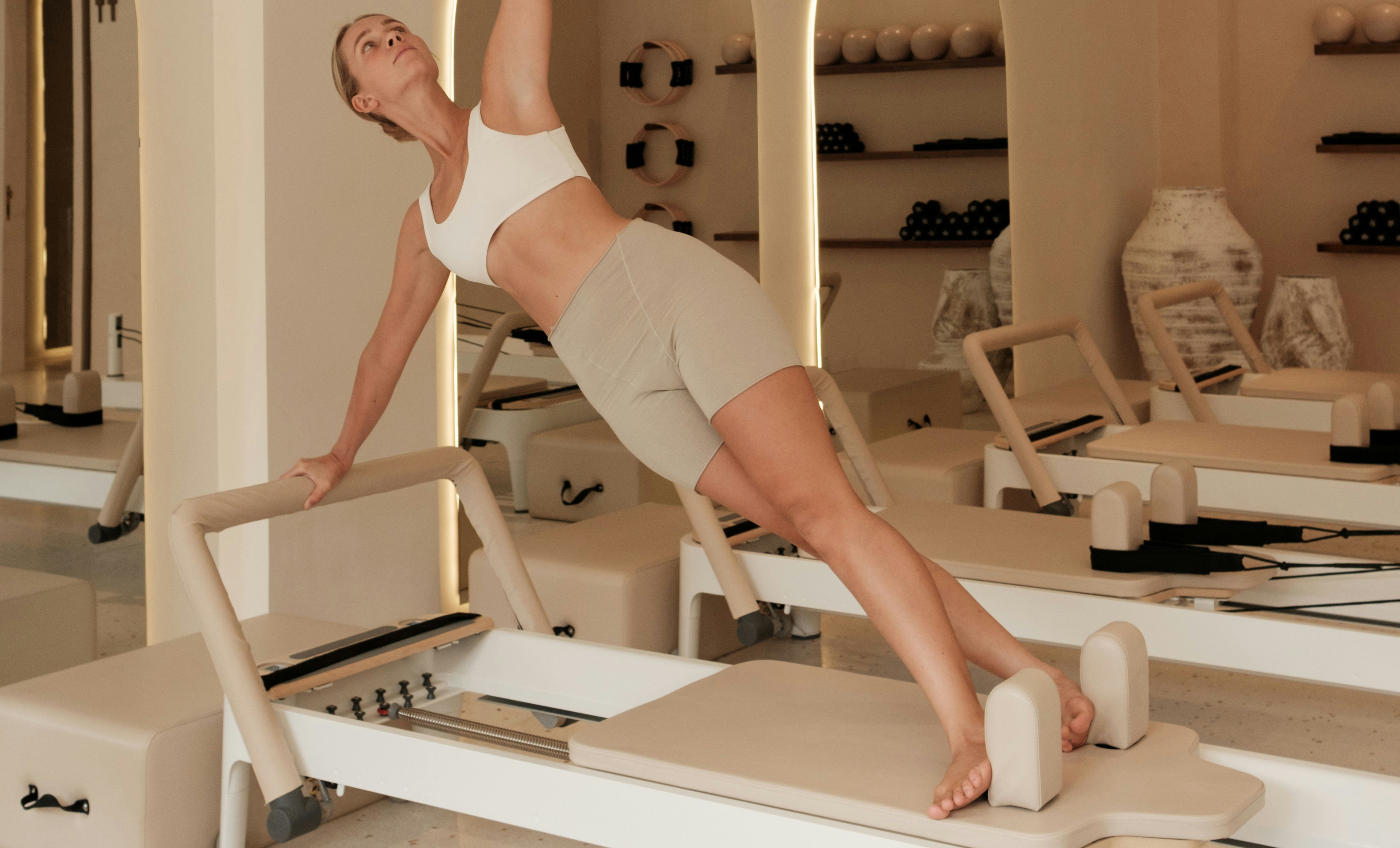


If you’ve heard friends rave about reformer classes or seen that distinctive sliding bed apparatus at your gym, you might be wondering: what is reformer pilates? In simple terms, reformer pilates is a form of exercise performed on a specialized piece of equipment called a reformer, which uses springs, straps, and a sliding carriage to create resistance-based movements that build strength, flexibility, and body awareness. Unlike mat pilates which relies solely on body weight, the reformer adds adjustable resistance and support that can make exercises both more challenging and more accessible, depending on how it’s set up.
This guide will give you a plain-English breakdown of what the pilates machine is, how typical sessions flow, the potential benefits you might experience, guidance on frequency, and how reformer compares to mat pilates so you can decide which suits your goals and budget.
What is a Pilates Reformer and How It Works
The pilates machine, more formally called a reformer, might look intimidating at first glance, but understanding its main components makes it much less mysterious.
Main components:
- Carriage: The flat, padded platform that slides back and forth on rails. You’ll lie, sit, kneel, or stand on this surface during exercises.
- Springs: Typically 4-5 springs of varying resistance (light to heavy) attach the carriage to the frame. Adding or removing springs changes how much effort is required to move the carriage. More springs = more resistance to push/pull against; fewer springs = lighter load but often more challenge to control the movement.
- Straps and ropes: Attached to the springs via pulleys, these allow you to pull or push with your hands or feet, creating resistance in multiple directions.
- Footbar: A stationary bar at one end where you can place your feet for pushing exercises.
- Shoulder blocks: Padded stops that prevent you from sliding off the carriage during certain moves.
How spring settings work:
Spring tension determines both resistance and tempo. Heavier spring settings provide more support and resistance, which can actually make some movements easier by helping you control the carriage. Lighter settings require more internal control and stability because the carriage moves more freely. Your instructor will adjust springs throughout the session based on the exercise and your level.
Entry-level moves:
- Footwork: Lying on your back with feet on the footbar, you press the carriage away and control its return. This warms up legs and teaches carriage control.
- The hundred: A core exercise where you hold a static position while pumping your arms, engaging abdominals.
- Leg circles: Lying down with feet in straps, you draw controlled circles, challenging hip stability and core.
What “good form” feels like:
Reformer pilates emphasizes quality over quantity. Good form typically means: maintaining a stable pelvis (not rocking or tilting excessively), controlling the carriage smoothly in both directions rather than letting it bang or rush, breathing steadily, and moving from your core rather than just your limbs. You should feel muscles working but not straining or creating pain.
Safety essentials:
Always work with a qualified instructor, especially when starting. They’ll set up the equipment correctly, teach proper form, and modify exercises for your body. Tell your instructor about any injuries, surgeries, or areas of discomfort before class so they can adjust your workout accordingly. Never force a movement that causes pain.

Pilates Reformer Benefits
The pilates reformer benefits are typically described by regular practitioners in everyday terms rather than medical guarantees. Here’s what people commonly report:
- Improved posture awareness: The reformer’s feedback, the resistance, the need for control, may help you become more conscious of alignment. Desk workers often notice they catch themselves slouching less as they develop awareness of their spine and shoulders.
- Core control: Nearly every reformer exercise engages the deep core muscles. Over time, this may help build functional strength that supports daily activities like lifting, bending, or standing for long periods.
- Enhanced mobility: The controlled, full-range movements can help maintain or improve flexibility in hips, shoulders, and spine. Many people find they move more freely in everyday life.
- Mindful strength building: Unlike high-intensity workouts, reformer pilates builds strength through precision and control. It’s a form of mindful movement where you focus intently on each repetition.
- Low-impact cross-training: The reformer is gentle on joints, making it suitable for people recovering from injuries or those who can’t do high-impact activities. Runners, for example, often use reformer pilates to balance the repetitive stress of running with controlled, varied movement patterns.
- Brief example scenario: Sarah, a marathon runner, added reformer pilates twice weekly to address persistent hip tightness and improve her running form. After a few months, she noticed better hip mobility and felt more balanced in her stride.
These benefits may help support overall wellbeing and movement quality, though individual experiences vary. Reformer pilates is a wellness practice, not a medical treatment.
How Often Should You Do Reformer Pilates?
Doing pilates is your choice, but bow often should to do reformer pilates depends on your goals, fitness level, and schedule, but here’s realistic guidance:
- Starting out (first 4-6 weeks): 1-2 times per week allows your body to learn the movements and adapt without overwhelming muscles that aren’t used to this type of work. This frequency gives you time to absorb what you’ve learned and recover between sessions.
- Building progress: Once you’re comfortable with the basics, 2-3 times per week can help you progress steadily. This frequency allows you to refine technique, increase spring resistance, and see noticeable changes in strength and control.
- Why rest days matter: Pilates challenges muscles in unique ways. Rest days allow tissues to adapt and strengthen. Doing reformer daily, especially as a beginner, can lead to overuse fatigue rather than improvement.
- Combining with other activities: Reformer pilates pairs well with walking, swimming, or strength training on alternate days. For example, you might do reformer on Tuesday and Thursday, strength training Monday and Friday, and walk or rest on other days. This creates a balanced routine that addresses different aspects of fitness.
Schedulable options:
- Moderate routine: Tuesday + Thursday reformer, weekend walk or yoga
- Active routine: Monday/Wednesday/Friday reformer, Tuesday/Saturday other cardio or strength
- Maintenance routine: Once weekly reformer plus regular walking or home workouts
The key is consistency over intensity. Two well-executed sessions weekly will serve you better than sporadic attendance.
Pilates Mat vs Pilates Reformer
Choosing between pilates mat vs pilates reformer depends on your goals, budget, and access. Here’s a balanced comparison:
Cost:
- Mat: Minimal investment, just a mat ($20-50). Classes are typically less expensive ($15-25 per session) or free via online videos.
- Reformer: Studio classes cost more ($30-45 per session) due to equipment and smaller class sizes. Home reformers are expensive ($300-3000+).
Feedback and support:
- Mat: Relies entirely on your body weight and control. Less external feedback can make it harder to know if you’re doing exercises correctly.
- Reformer: The springs and carriage provide tactile feedback; you can feel when you’re controlling movement well. The equipment can also assist or challenge you in ways mat work cannot.
Variety:
- Mat: More limited range of exercises, though still effective. Focuses on fundamentals.
- Reformer: Hundreds of exercise variations possible by changing spring settings, positions, and strap use. More options for progression and modification.
Access and convenience:
- Mat: Can practice anywhere, home, park, hotel room. Ultimate flexibility.
- Reformer: Requires studio access or home equipment. Less spontaneous but more structured guidance.
Who might prefer mat:
- Budget-conscious practitioners
- Those wanting to practice at home regularly
- Beginners learning fundamentals before adding equipment
- People who travel frequently
Who might prefer reformer:
- Those who value equipment feedback and variety
- People seeking guided progression with an instructor
- Individuals recovering from injury who need modifications and support
- Anyone who enjoys studio environments and community
Choose by goal + access: If you want foundational pilates understanding and flexibility to practice anywhere, start with mat. If you have access to a reformer studio and want more variety with instructor guidance, reformer offers unique benefits. Many practitioners do both, mat at home for maintenance, reformer at studio for progression and challenge.
Neither is superior; they’re different tools for similar goals. Your lifestyle, budget, and preferences should guide your choice.
This article is for informational purposes and does not replace professional fitness or medical advice. If you have injuries, health conditions, or concerns about starting reformer pilates, consult with a qualified instructor and your healthcare provider.