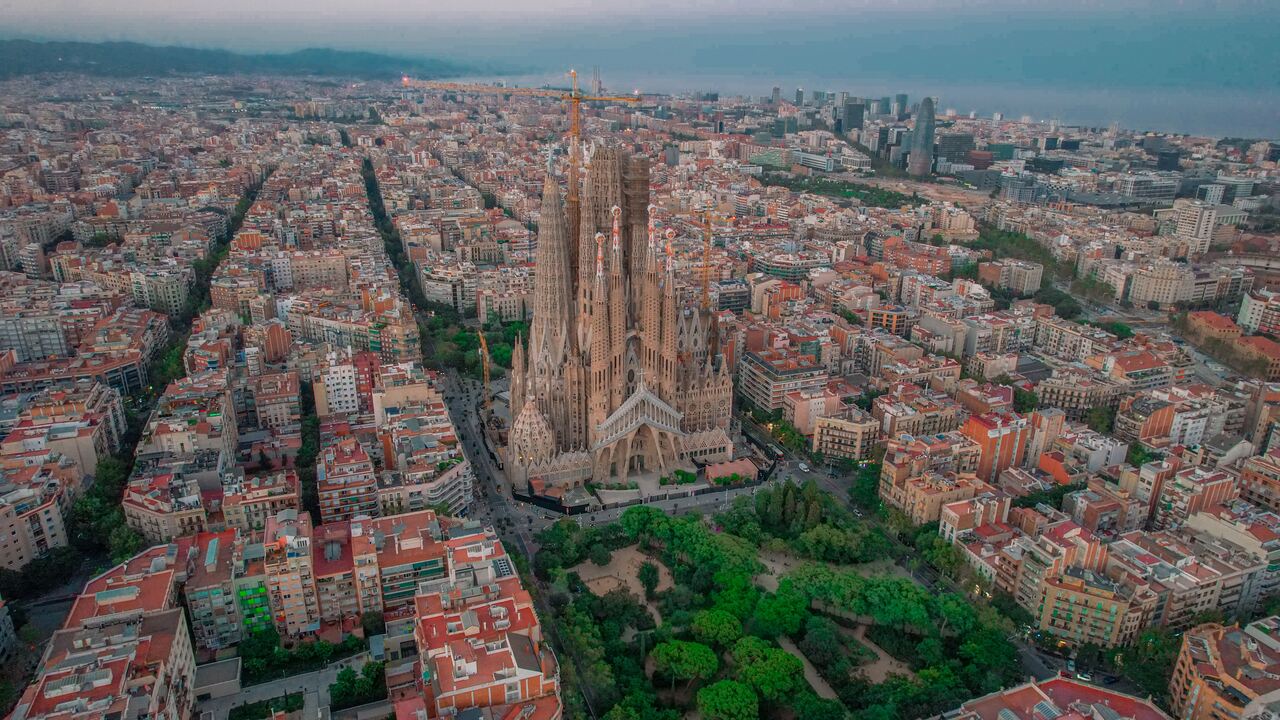


Barcelona is one of the most visited cities in Europe, and for good reason. But the version of it that most visitors experience, the Ramblas, the Sagrada Familia, the Gothic Quarter at peak hours, tells only part of the story. The barcelona hidden secrets worth seeking out are not necessarily unknown, but they are quieter, more layered, and more genuinely revealing of what makes this city so compelling beyond its most photographed facades. This guide is for readers who want to go a little further.
Barcelona hidden gems that feel worth the detour
The best barcelona hidden gems are not places invented for the sake of novelty. They are spots that simply reward the extra effort of getting there, where the city feels less curated and more alive.
Parc del Laberint d’Horta
Most visitors to Barcelona never make it to Horta, a residential district in the northern part of the city where you will find the oldest surviving garden in Barcelona. The Parc del Laberint d’Horta is a neoclassical garden built in the late eighteenth century, centred around a cypress maze that gives it its name. The atmosphere is unlike anything else in the city: formal, quiet, slightly theatrical, and almost always uncrowded. It is a short metro ride from the centre and the contrast with the busy tourist circuits could not be greater.
The Turo de la Rovira viewpoint
While Bunkers del Carmel tends to appear on travel lists with increasing frequency, many visitors still bypass it in favour of Park Guell. That is their loss. The anti-aircraft battery ruins at the top of Turo de la Rovira offer one of the most complete panoramic views of Barcelona available from any public space, taking in the sea, the mountains, the port, and the full spread of the urban grid below. The walk up through the Carmel neighbourhood is itself rewarding, passing through streets that feel entirely local and unhurried.
The Poblenou cemetery gardens
The Poblenou neighbourhood has become well known in recent years for its creative and residential character, but fewer visitors find their way to the Cementiri de Poblenou, one of the most architecturally striking neoclassical cemeteries in Spain. The monumental sculptural work and the quiet grandeur of the space make it genuinely worth an hour of exploration. Locals use it as a place of calm reflection, and it has a quality that is hard to find elsewhere in such a dense city.
Jardins de Laribal on Montjuic
Montjuic is visited mainly for the castle, the Olympic stadium, and the Fundacio Miro. But the terraced gardens of Laribal, tucked into the hillside between paths and pergolas, are known to relatively few visitors. Fountains, rose gardens, and quiet benches with city views create a very different Montjuic experience from the main tourist circuit. Worth combining with a walk through the wider garden network on the hill.
Barcelona secret places that show a different side of the city
Some of the most interesting barcelona secret places are not hidden in a geographical sense. They are simply overlooked because they do not feature on the standard itinerary.
The Sant Pau Recinte Modernista
While the Sagrada Familia draws enormous crowds a short walk away, the Sant Pau Recinte Modernista, Lluis Domenech i Montaner’s extraordinary Art Nouveau hospital complex, remains far less visited than it deserves. It is, by most architectural measures, as remarkable as anything Gaudi built in the city: a series of intricately decorated pavilions set within gardens, with coloured tile work, sculpted facades, and a spatial ambition that is genuinely breathtaking. It was declared a UNESCO World Heritage Site in 1997. That it remains relatively quiet is one of Barcelona’s great gifts to curious visitors.
The Eixample interior courtyards
The Eixample district was designed in the nineteenth century by Ildefons Cerda with a visionary urban plan that included shared interior garden courtyards within each city block. For various reasons, most of these were never fully realised as public green spaces. A handful have been recovered in recent decades and are open to the public, offering a glimpse into the original utopian logic of the grid. The Jardi de les Cotxeres in Gracia and several recovered interior gardens in the Eixample proper are worth seeking out for anyone interested in the city’s urban history.
The Palau Guell off-hours
Most people who visit the Palau Guell, Gaudi’s early masterwork on the edge of the Raval, do so during peak visiting hours when the experience can feel rushed. Going early in the morning when the doors open, or on a weekday outside high season, transforms the visit entirely. The rooftop in particular, with its mosaic chimneys and city views, deserves time and quiet that crowds rarely allow.
Secret spots in Barcelona for slower, more local moments
The best secret spots in barcelona are often less about architecture and more about pace. These are places where the city simply feels like itself.
The bookshops of Gracia
The neighbourhood of Gracia has a density of independent bookshops, design studios, and small cultural spaces that rewards slow exploration on foot. Streets like Carrer de Verdi or the area around Placa del Diamant have a character that is genuinely local without being inaccessible. Sitting in one of the neighbourhood squares on a weekday afternoon, watching the rhythm of the street, is one of the most pleasant and underrated ways to spend time in Barcelona.
The Barceloneta breakwater at dawn
The beach at Barceloneta is well known. The breakwater that extends into the sea at its northern end, especially in the early morning before the city wakes up, is not. Walking out along the stone pier as the light comes up over the Mediterranean, with the city skyline behind you and almost no one else around, produces one of those quiet travel moments that stay with you long after the more organised experiences have blurred together.
The Mercat de l’Abaceria in Gracia
While the Boqueria on the Ramblas has become largely a tourist destination, the Mercat de l’Abaceria in upper Gracia retains the texture of a genuine neighbourhood market. It is more eclectic, less polished, and considerably less crowded, with a mix of fresh produce, vintage items, food stalls, and local regulars that gives it a character the more famous markets have largely lost.
How to explore Barcelona beyond the obvious
Finding the quieter, more characterful side of Barcelona is less about knowing specific addresses and more about how you choose to move through the city.
Stay in one neighbourhood for a morning rather than crossing the city. Barcelona’s districts each have their own distinct atmosphere, and that atmosphere becomes apparent only when you spend enough time to notice it. Pick one area, walk its streets without a fixed destination, and see what you find.
Visit the headline attractions at off-peak times. Early morning entry, late afternoon slots, or weekday visits in shoulder season transform the experience of even the most visited places. The difference between a monument at opening time and mid-afternoon is the difference between a contemplative experience and a managed queue.
Prioritise walking over transport between close points. The in-between spaces of Barcelona, the passages, the unexpected squares, the architectural details at eye level, are part of what makes the city interesting. They disappear when you take the metro between every stop.
Follow residential streets rather than tourist corridors. The streets one block back from the main routes in almost any Barcelona neighbourhood feel completely different. They are where the city actually lives.
A more personal way to enjoy Barcelona
Barcelona rewards the kind of traveller who is willing to slow down and pay attention. Its light, its texture, its neighbourhood rhythms, and its quieter corners are all available to anyone who moves through it with a little less urgency than the standard city-break itinerary tends to allow.
The most memorable Barcelona experiences are rarely the most organised ones. They are the afternoon spent in a Gracia square watching children play while others read newspapers on benches. The viewpoint discovered by following a path that seemed to go nowhere. The small gallery found by wandering into a courtyard. The early morning hour at the seafront before anyone else has arrived.
None of this requires insider knowledge or special access. It requires only the decision to treat the city as something to inhabit, even briefly, rather than something to photograph and leave. Barcelona will meet that decision generously.
San Juan Night in Spain: Traditions, Bonfires, and Celebrations