

Almería is the kind of destination that rewards those who seek it out. Its attractions range from an impressive Moorish fortress to one of the Mediterranean’s best-preserved natural coastlines, yet the city remains far less visited than other Andalusian destinations of comparable quality. That relative tranquility is part of what makes it so special. This guide covers the very best that the city and its surroundings have to offer, from must-see landmarks to quieter, more personal experiences that capture what Almería truly feels like.
Almeria attractions you should not miss
These are the places that any first-time visitor should make time for. Each one offers something genuinely worth understanding, not just ticking off.
The Alcazaba
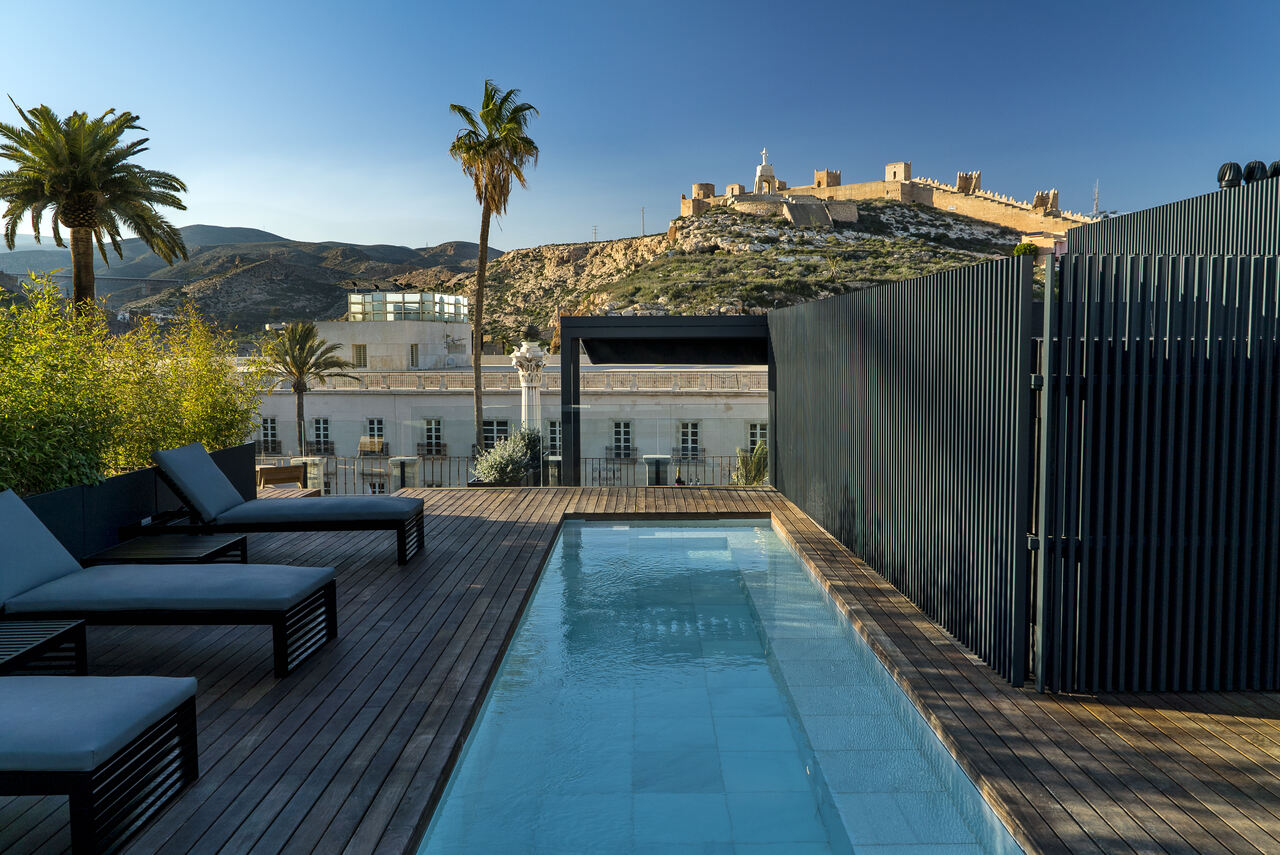
The Moorish fortress that rises above the city is the most impressive sight in Almería and one of the most significant Islamic monuments in Spain. Its sheer scale surprises most visitors: it covers an enormous area across the hillside and includes three distinct walled enclosures, gardens, and sweeping viewpoints over the sea, the rooftops, and the desert landscape stretching inland. Entry is free for EU citizens, which makes it one of the best-value cultural visits in southern Spain. Go early in the morning or late in the afternoon to avoid the heat and to catch the light at its best.
The Cathedral of the Incarnation
The Almería cathedral is one of the finest examples of defensive religious architecture in Spain. Built in the sixteenth century partly in response to pirate raids along the Mediterranean coast, it looks from the outside more like a fortress than a church, with solid towers and thick walls that give way to a more refined and carefully ornamented interior. Its history and its architectural singularity make it essential for anyone interested in understanding the city’s identity and the particular pressures that shaped it.
The historic centre and the Chanca neighbourhood
Walking through the historic centre of Almería without a fixed agenda is one of the best ways to absorb the city’s atmosphere. The Calle de las Tiendas, the Plaza Vieja, and the surrounding streets have a human scale that makes them easy and pleasant to explore on foot. The Chanca neighbourhood, tucked below the Alcazaba with its brightly coloured cave-houses carved into the rock, offers a striking visual contrast and a very different sense of the city. It is a lived-in neighbourhood, so visiting with a degree of quietness and respect is the right approach.
The Paseo de Almería and the port
The main boulevard running through the city centre is a good starting point for getting oriented and feeling the rhythm of everyday Almería. From there it is a short walk to the port, which has been significantly renovated in recent years and now offers a pleasant waterfront promenade with views back toward the city and out to sea.
Things to do Almeria if you want more than sightseeing
Once the main landmarks are visited, the best things to do Almeria offers are often the ones that are less structured. The city reveals itself differently when you slow down.
Walk the seafront at sunset
The beach of El Zapillo and the waterfront promenade that runs alongside it take on a particular quality in the late afternoon, when the light softens and the sea turns gold. It is one of those unremarkable pleasures that ends up being one of the most memorable parts of a visit. A long walk along the water at the end of the day, with nowhere particular to be, is very much in the spirit of Almería.
Visit the Central Market
The covered market occupies a modernist building from the early twentieth century and is worth visiting for both its architecture and its atmosphere. The stalls offer fresh fish from the Mediterranean, fruit and vegetables from the surrounding growing region, spices, and local produce. Even without buying anything, the energy of a working market in full swing is one of the best ways to understand where you are.
Explore the Civil War tunnels
Beneath the streets of central Almería lies a network of tunnels built during the Spanish Civil War to shelter the civilian population from aerial bombardment. They are exceptionally well documented and maintained, and offer a historical perspective on the city that is entirely different from its Moorish heritage. Visits can be booked through the local council and are well worth the hour they take.
Almeria things to do for different travel styles
The range of Almeria things to do makes the city surprisingly adaptable to different rhythms and interests.
For couples
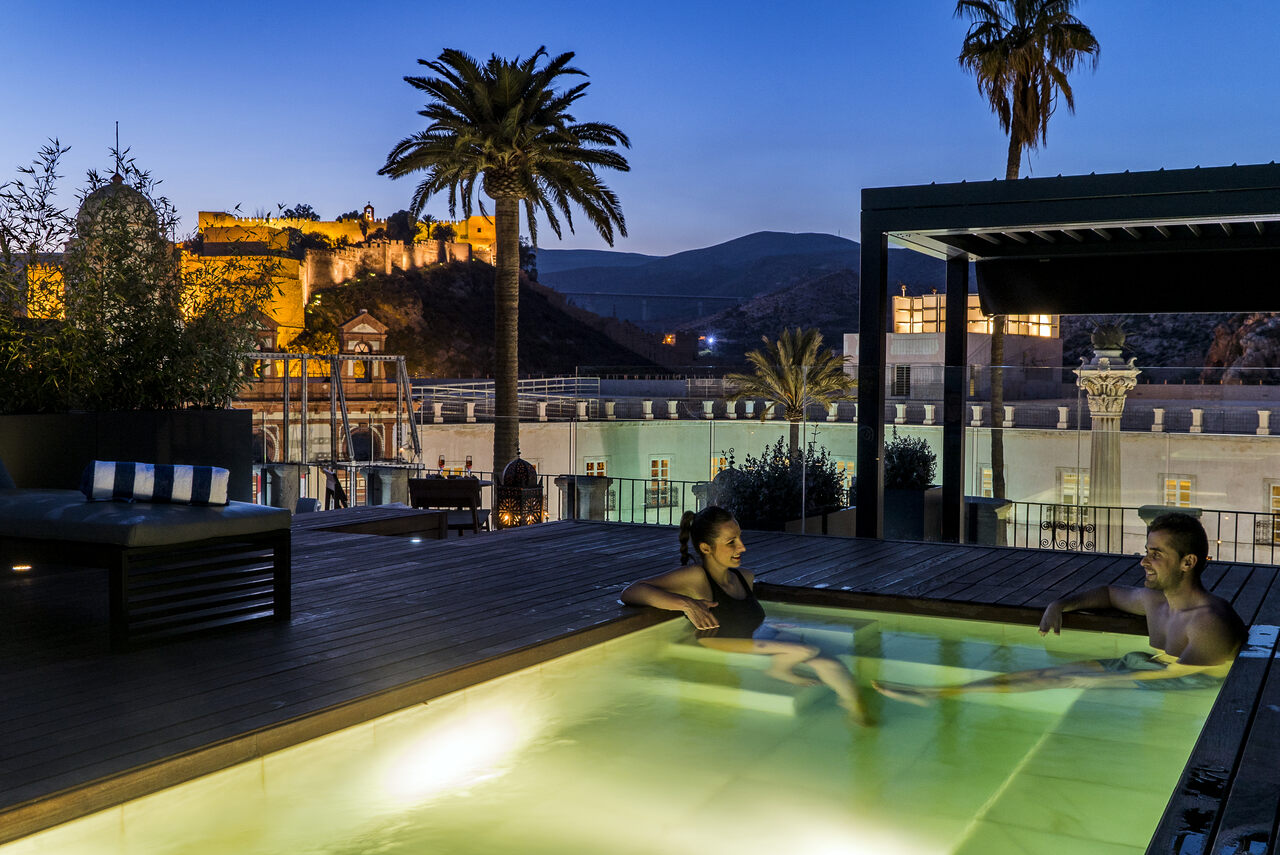
The combination of the Alcazaba at sunset, a quiet cala at the Cabo de Gata, and a relaxed dinner by the sea makes Almería a genuinely good option for a short romantic break. The city’s unhurried pace suits couples who want to enjoy being somewhere together rather than racing through an itinerary. A spa or thermal experience like AIRE Ancient Baths in the afternoon adds another layer to that sense of shared unhurried time.
For solo travellers
Almería is a very manageable city to navigate alone. It is compact, safe, and easy to explore on foot. The tapas culture makes eating solo natural and social, and the Cabo de Gata is ideal for independent exploration at whatever pace suits the day.
For culture and history
The Alcazaba, the cathedral, the Civil War tunnels, and the film sets of the Tabernas desert (where dozens of Spaghetti Westerns were shot in the 1960s and 1970s) form a cultural itinerary that is genuinely varied and hard to replicate elsewhere in Spain.
For nature and landscape
The Cabo de Gata natural park and the Tabernas desert together give Almería a natural landscape offer that is unique in Europe. Volcanic coastline, turquoise coves, arid badlands and open sky: the scenery is dramatic and almost entirely unspoiled.
Almeria places to visit if you have limited time
If you only have one or two days, the Almeria places to visit worth prioritising are the ones that give you the most distinct sense of the destination in the shortest time.
On a single day, the Alcazaba should come first, ideally in the morning when it is cooler and quieter. From there, walk down through the historic centre to the cathedral, take a look at the market if it is open, and spend the afternoon at El Zapillo beach or along the port promenade. End the day with a walk at sunset and dinner near the waterfront.
With a second day, dedicate it entirely to the Cabo de Gata. Choose one or two beaches rather than trying to see everything, and allow time to simply be there rather than rushing between coves. Los Genoveses and Mónsul are among the most striking, though access may be restricted in high season, so check in advance.
If there is a third day, the Tabernas desert and its film sets make for a genuinely unusual half-day excursion that contrasts dramatically with the coastal experience and leaves most visitors with a strong impression of just how varied the landscape around Almería really is.
Tips for enjoying Almería more fully
Plan around the heat. From June through September, midday temperatures in Almería can be intense. Schedule active visits and walks for the morning or late afternoon, and use the middle hours of the day for rest, shade, or indoor spaces.
Combine city and coast. Almería works best as a base for both. A day in the city and a day at the Cabo de Gata is a structure that most visitors find deeply satisfying and that shows two completely different sides of the destination.
Book coastal access in advance. During high season, access to some of the most popular beaches in the Cabo de Gata natural park is regulated. Check before you go whether you need to book parking or entry in advance for the beaches you want to visit.
Walk without a plan occasionally. Almería rewards unhurried exploration. Its neighbourhoods, its light, and its everyday atmosphere are best absorbed when you are not trying to get somewhere specific. Leave gaps in the itinerary for wandering.
Stay at least two nights. One night is enough for a taste; two or three give you the time to actually settle into the pace of the place. Almería does not rush, and visits that match that rhythm tend to be the ones people remember most fondly.
Almería does not sell itself loudly. It is a city that gives back what you bring to it: curiosity, time, and a willingness to look beyond the obvious. Do that, and it will surprise you.