


The steam bath is one of the oldest and most widely used forms of heat therapy in the world. Found across Roman, Ottoman and Nordic traditions, it remains one of the most popular wellness experiences in spas and thermal centres today. The benefits of a steam bath go well beyond the immediate sensation of warmth: they work on the skin, the respiratory system, circulation and the nervous system in ways that are worth understanding before you step inside.
What is a steam bath and how does it work
A steam bath, also known as a hammam in the Ottoman tradition or a Turkish bath in the Western context, is an enclosed space where water vapour is generated at a temperature of between 40 and 50 degrees Celsius, with a relative humidity close to 100 per cent. Unlike a sauna, where the heat is dry and temperatures can exceed 80 degrees, a steam bath works with moist heat at a lower temperature but with an equally intense thermal sensation due to the saturation of moisture in the air.
Steam is produced by passing water over a heat source, filling the room with a dense, warm mist that wraps evenly around the body. The result is a gradual sweat that opens the pores, activates circulation and promotes muscle relaxation without the more aggressive thermal impact of extreme dry heat.
Steam bath benefits for the body
Improved blood circulation
Moist heat dilates blood vessels and improves blood flow, which increases the oxygenation of tissues and reduces the feeling of heaviness in the legs and limbs. This effect is particularly noticeable after physical exercise, when muscles need to replenish nutrients and clear metabolic waste.
Who it is especially useful for: people with slow circulation, tired or heavy legs, or those who exercise regularly and want to optimise muscle recovery.
Skin cleansing and hydration
Prolonged exposure to steam opens the pores and helps remove accumulated impurities. At the same time, the humidity in the air hydrates the surface layers of the skin, leaving it softer and looking better after the session. This is one of the most visible benefits and one that users tend to notice most easily.
Who it is especially useful for: people with dry skin, a tendency towards blocked pores, or those who want to complement their skincare routine with a pore-opening step before any treatment.
Relief of muscle tension
Moist heat works directly on the muscles, reducing stiffness and pain in areas of habitual tension such as the back, shoulders and neck. Unlike a localised heat source such as a hot water bottle, a steam bath covers the whole body simultaneously, producing a more complete and sustained muscle relaxation.
Who it is especially useful for: people with chronic muscle tension, frequent contractures, or those who spend many hours sitting in front of a screen.
Respiratory benefits
Steam-saturated air makes breathing easier by humidifying the airways. For people with mild congestion or mucus, a steam bath session can temporarily relieve the feeling of blockage and make it easier to clear secretions. Some centres add eucalyptus or mint essential oils to the steam to enhance this effect, though neither is necessary to obtain the basic benefit.
Who it is especially useful for: people prone to nasal congestion or who live in very dry environments. Not recommended for active asthma without prior medical advice.
Stress reduction and better sleep
The heat and humidity of a steam bath activate the relaxation response of the parasympathetic nervous system, which lowers cortisol levels and helps ease the body into a calmer state. Many people report a noticeable improvement in sleep quality in the hours following a session, particularly when combined with a gradual drop in temperature before going to bed.
Who it is especially useful for: people dealing with accumulated stress, difficulty switching off at the end of the day, or those looking to improve sleep quality without pharmacological solutions.
Steam bath versus sauna: what is the difference
Although both aim to generate body heat and sweating, a steam bath and a sauna work differently and produce very different sensations.
Temperature: a sauna operates between 70 and 100 degrees with minimal humidity (between 10 and 20 per cent). A steam bath operates between 40 and 50 degrees with maximum humidity (close to 100 per cent). The thermal sensation in both cases can be equally intense, but the mechanism is the opposite.
Effect on the skin: the dry heat of a sauna can slightly dehydrate the skin if you do not moisturise afterwards; the steam in a Turkish bath hydrates the skin during the session itself.
Respiratory effect: moist steam is more beneficial for the airways. A sauna can be harder for people with respiratory sensitivity.
Tolerance: a steam bath tends to be better tolerated by people who cannot handle very high temperatures, as the sensation is more enveloping but less aggressive.
Neither is better than the other: the choice depends on personal preference and what each body tolerates best. In complete thermal circuits, such as the one at AIRE Ancient Baths, both experiences are part of a sequence of contrasts designed to work the body progressively.
How long should you stay in a steam bath
The recommended duration for a steam bath session is between 10 and 20 minutes, depending on personal tolerance and whether it is your first time or a regular practice. In a thermal circuit, the most common approach is to alternate the steam bath with other temperatures: a cold or warm water immersion between each heat phase enhances the circulatory benefits and allows the body to recover before another exposure to steam.
Signs it is time to leave: dizziness, nausea, a feeling of being overwhelmed or difficulty breathing comfortably. A steam bath should not become an endurance test. If any of these sensations appear, step out, hydrate and rest.
The steam bath at AIRE Ancient Baths
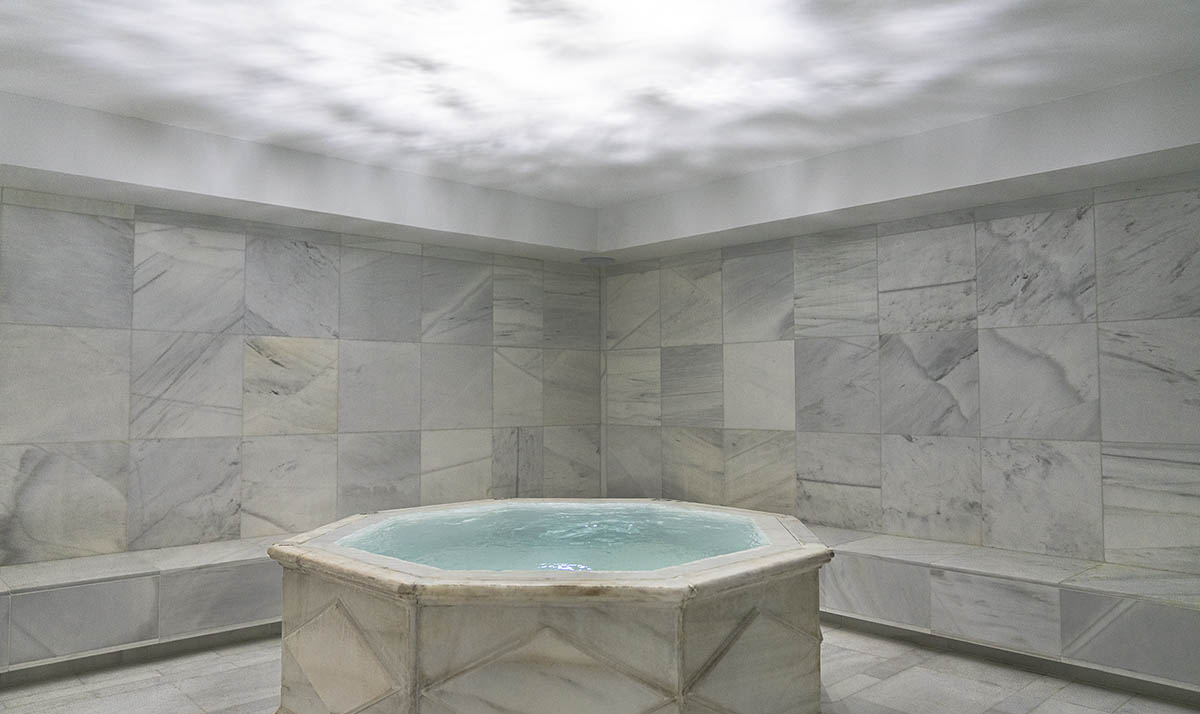
At AIRE Ancient Baths, the Laconicum forms part of the thermal circuit as a moist heat space. Designed to produce gradual sweating and deep muscle relaxation, it sits within a sequence that also includes the Caldarium, the Tepidarium, the Frigidarium and the Flotarium, each with a different temperature and purpose within the journey.
The result is a complete thermal experience that works the body in phases, without rushing, inside historic buildings in Barcelona, Seville, Almeria, Vallromanes, London, Copenhagen, New York, Chicago and Toronto.
Frequently asked questions about steam baths
What are the main benefits of a steam bath?
The most documented are improved blood circulation, pore opening and skin hydration, relief of muscle tension, temporary relief of nasal congestion and stress reduction. The intensity of each benefit varies depending on the person and how frequently they use a steam bath.
How long should you stay in a steam bath?
Between 10 and 20 minutes is the standard range. In a thermal circuit, the most effective approach is to alternate the steam bath with cooler temperature phases rather than staying inside for the whole session. If you feel dizzy or unwell, step out immediately.
What is the difference between a steam bath and a sauna?
A sauna uses dry heat at very high temperatures (between 70 and 100 degrees); a steam bath uses moist heat at a lower temperature (between 40 and 50 degrees) with humidity close to 100 per cent. A steam bath hydrates the skin during the session and is easier on the airways. A sauna produces more intense sweating and is preferred by those who enjoy extreme dry heat.
Is a steam bath good for the skin?
Yes. Steam opens the pores and helps remove impurities, while the humidity hydrates the surface layers of the skin. It is particularly useful as a step before any facial treatment, as it prepares the skin to absorb active ingredients more effectively afterwards.
Who should avoid a steam bath?
It is advisable to avoid a steam bath during pregnancy, in cases of serious cardiovascular disease, uncontrolled high blood pressure, active asthma or fever. If in any doubt, the most sensible step is to consult a doctor before your first session.